
Moblie: 8613816755915
Best type of screws for attaching drywall to metal studs

Attaching drywall (gypsum board) to metal studs is fundamentally different from working with wood framing. The fasteners used must be specifically engineered to engage with thin-gauge steel rather than biting into soft lumber.
Fine Threads for Metal
The single most important distinction is thread type. Fine-thread drywall screws are the mandatory choice for metal studs. Their closely spaced threads provide a greater number of threads per inch, which maximizes engagement with the thin metal surface of the stud. This fine threading creates a strong, self-tapping connection that resists pull-out and prevents stripping.
Do not use coarse-threaded drywall screws (W-type). Although their wide, deep threads provide effective grip in softwood, they are completely unsuitable for metal.
The Two Primary Screw Types: S-Type vs. S-12
Within the category of fine-thread screws, there are two primary families, each targeting a specific range of metal stud thicknesses. The choice between them is determined by the gauge of your metal studs.
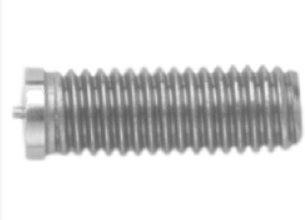
ASTM C1002 — Type S (Self-Piercing)
- Best for: Light-gauge steel studs up to 0.033 inches (0.84 mm) thick, which typically corresponds to 25-gauge to 20-gauge framing.
- Head: Bugle head, which allows for clean countersinking without tearing the drywall paper.
- Thread: Fine thread, with 32 threads per inch (TPI) being standard for Type S screws.
- Point Type: Features a sharp, self-piercing point designed to cut through drywall and penetrate the steel stud web without the need for pre-drilling.
- Standards: Must conform to ASTM C1002 for light-gauge applications.
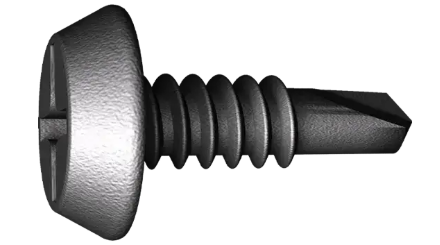
ASTM C954 — Type S-12 (Self-Drilling)
- Best for: Thicker, heavier-gauge steel studs ranging from 0.033 inches to 0.112 inches (0.84 mm to 2.84 mm) thick, covering the 20-gauge to 12-gauge range.
- Point Type: Incorporates a self-drilling drill point that functions like a small drill bit, boring through the heavier steel before the threads engage. This eliminates the need for pre-drilling even on thicker metal.
- Flutes: The drill point has cutting flutes that clear metal chips, preventing heat buildup and ensuring a clean hole.
- Standards: Must conform to ASTM C954 for structural or load-bearing steel framing.
- Important Note: These standards must not be confused. Screws intended for thinner-walled steel studs must not be used with thicker-walled steel studs, as this will cause the connection to fail under load. Specifying the wrong standard will not only result in substandard performance but also constitutes a violation of building codes.
Screw Diameter (Gauge) and Length Selection
Diameter of Screw
The most common screw gauges for drywall are #6 and #8.
#6 (0.138 inch diameter) is the standard for most residential and light commercial work.
#8 (0.164 inch diameter) is sometimes used for heavier applications.
Length of Screw
Electing the correct length is determined by the thickness of the drywall being installed. The building code requires a minimum penetration of 3/8 inch (10 mm) into the metal stud.
Common length recommendations based on drywall thickness:
Drywall Thickness Recommended Screw Length
1/2 inch (12.7 mm) 1-1/4 inches (32 mm)
5/8 inch (15.9 mm) 1-5/8 inches (41 mm)
Double-layer applications 2 inches or longer
For a single layer of 1/2-inch drywall on a 25-gauge stud, use a 1-1/4 inch screw. For a 20-gauge stud, 1-5/8 inch screws are typically recommended.
Coatings and Corrosion Resistance
- The surface treatment of the screw affects both its driving performance and its longevity:
- Black Phosphate: The most common coating for drywall screws. It provides a mild lubricant for faster driving and offers basic corrosion resistance for interior, dry applications.
- Zinc-Plated: Offers superior rust protection compared to phosphate. Recommended for general indoor framing where moisture may be a concern.
- Stainless Steel: Reserved for humid environments or exterior applications where maximum corrosion resistance is required.
- Stainless Steel: Reserved for humid environments or exterior applications where maximum corrosion resistance is required.
Screw Spacing
- Walls: Space screws 16 inches on-center in the field.
- Ceilings: Reduce spacing to 12 inches on-center to resist gravity.
- Edges: Place screws 8 inches on-center at panel edges.
- Minimum Edge Distance: Maintain at least 3/8 inch from the panel edge to avoid tear-out.
Driving Depth
The screw head should be driven just below the drywall surface, creating a slight dimple without breaking the paper facing. Over-driving strips the threads in the metal stud. Under-driving leaves the head protruding, which will show through the joint compound. A drywall screw gun with a depth-setting nosepiece (dimpler bit) is the recommended tool for precise control.
Selecting the correct screw for attaching drywall to metal studs is not a matter of preference—it is a requirement for a code-compliant, durable, and safe installation. The screw must match the stud gauge, meet the appropriate ASTM standard, and be driven to the correct depth with proper spacing.