Moblie: 8613816755915
Comparison of steel studs versus wood studs for wall framing

You might think choosing between steel studs and wood studs is simple. But that’s not actually the case. The older people might opt for wood studs because they consider them cheaper and easier to work with. When it comes to SOLIDECK, our steel studs may offer advantages in both of these aspects—not only in terms of cost and installation, but also in terms of durability.
Cost of studs
Because wood is sourced from nature, is abundant, and is easy to cut and fasten, material and labor costs are relatively low, making it the top choice for North American consumers. The price of steel studs fluctuates with the steel market, but depending on the region and time of year, it can be comparable to or even higher than that of wood. However, everything changed when SOLIDECK’s steel studs entered the market. SOLIDECK boasts a robust supply chain and utilizes advanced roll-forming technology, enabling SOLIDECK steel decking to be priced 20%–40% lower than traditional wood decking. If you’re skeptical, feel free to call SOLIDECK’s marketing department—you’ll receive a satisfactory answer.
Strength and Durability of studs
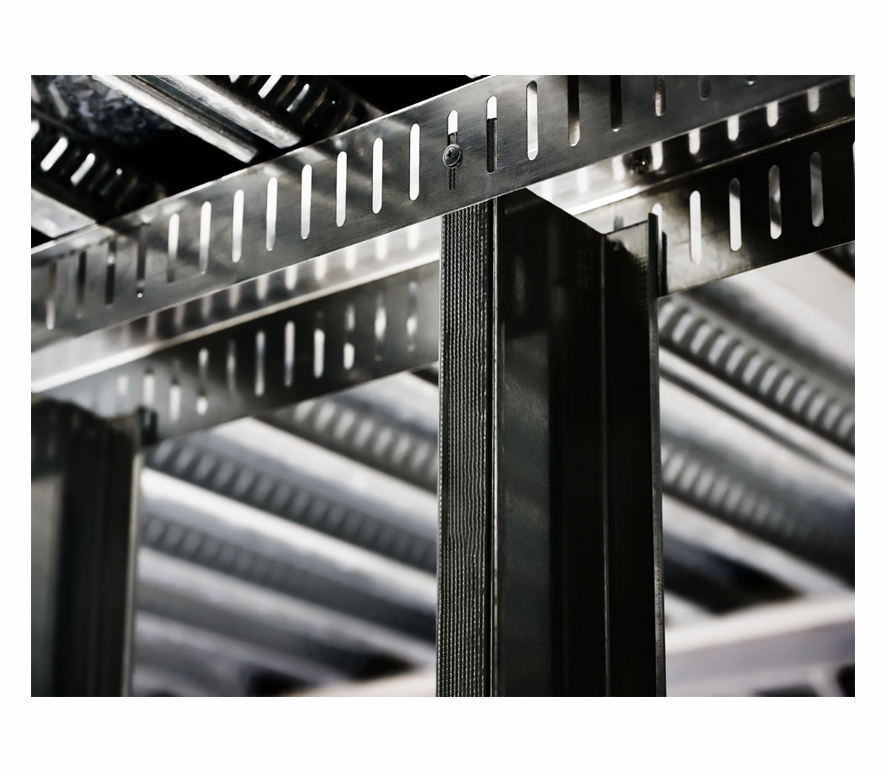
Steel studs offer greater strength and longer durability than wooden studs. SOLIDECK’s steel studs are primarily made from steel with a yield strength of at least 50 ksi, and in some cases even 60 ksi, giving them a clear advantage over wooden studs in terms of strength. In terms of steel protection, SOLIDECK’s steel studs typically feature a galvanized coating of at least G60, or optionally G90, giving them superior durability that far exceeds that of wooden studs. Wooden studs are prone to warping, moisture absorption, deformation, termite damage, and rot, mold growth, which significantly compromise the safety and durability of wooden structures. SOLIDECK’s steel studs are manufactured using advanced roll-forming technology, ensuring they will not deform, and their fire resistance also exceeds that of wooden studs.
Installation of studs
Wooden studs have long been a staple in traditional construction; they are easy to cut and shape, and there is a large pool of workers skilled in their installation. Steel studs, on the other hand, are prefabricated—much like children building with blocks. At the factory, individual components are prefabricated according to blueprints and renderings, and on-site, workers simply assemble them according to the plans. Steel studs are lightweight and easy to transport in bulk. Since the components are prefabricated in the factory, on-site cutting is minimal, and the extensive use of bolted connections reduces.
Acoustic Performance of studs
In some buildings, there are specific requirements for the acoustic performance of walls. Steel studs provide better sound insulation than wooden studs. Because steel studs have a slightly greater curvature, they help isolate the wall layers from one another, reducing the transmission of vibrations and thereby improving sound insulation. Furthermore, soundproofing materials can be installed between the steel studs, which further enhances the wall’s sound insulation.
Although steel studs are not a particularly new material, they are indeed set to largely replace wooden studs in the future. In particular, the introduction of SOLIDECK steel studs has been a boon to many users.