
Moblie: 8613816755915
What is the difference between structural and non-structural studs

Cold-Formed Steel are increasingly used in modern building systems, and metal studs have become an indispensable material. However, a key question remains: how to distinguish between structural and non-structural studs?
Are metal studs load-bearing
Whether or not they are load-bearing is the biggest difference between the two types of metal studs.
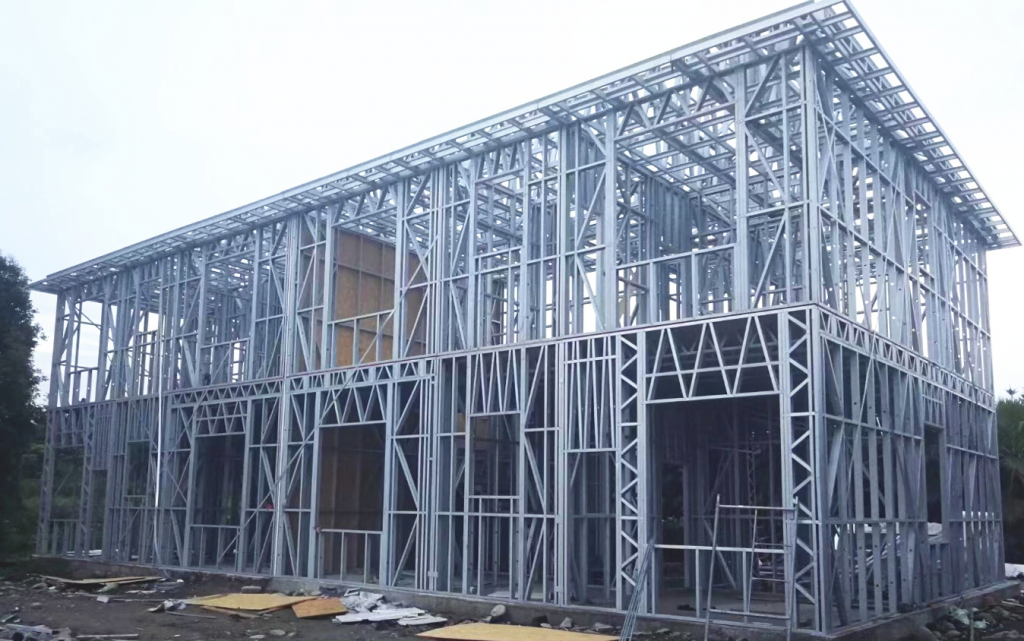
Structural metal studs are part of a building’s structure, and their function is to resist various vertical and horizontal loads. These loads include the dead weight (permanent load) of structural components such as floor slabs and roofs, live loads such as people and furniture, as well as wind loads, snow loads, and even seismic forces.
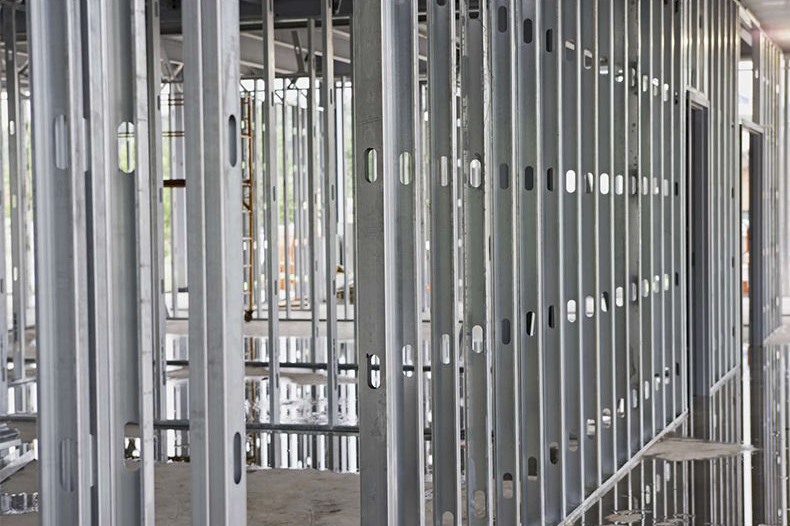
Non-structural metal studs are referred to as “partition studs” or “interior studs,” and their sole function is to support their own weight and the drywall attached to their surfaces. They do not participate in the transfer of any structural loads.
Differences in Metal Studs Specifications
Due to load-bearing considerations, the two types of metal studs differ in thickness and flange width.
Thickness of metal studs
Structural studs are made of thicker steel, typically ranging from 18 gauge to 12 gauge. Non-structural keels are much thinner, typically 25 gauge to 20 gauge.
Flange Width of metal studs
The standard width of the flanges on structural metal stud is 1-5/8 inches; wider flanges provide a larger contact surface and greater resistance to bending. Non-structural metal studs have a standard flange width of 1-1/4 inches and typically feature an embossed texture on their surface to ensure better adhesion to drywall.
Differences in Fastening Screws
Screws for structural metal studs are significantly harder and heavier, and must comply with the ASTM C955 standard, whereas screws for non-structural metal studs must comply with the ASTM C645 standard.
Different standards
Structural metal studs must comply with ASTM C955, “Standard Specification for Load-Bearing (Transverse and Axial) Steel Studs, Runners (Tracks), and Bracing or Bridging.” This standard establishes strict requirements regarding stud dimensions, mechanical properties, and corrosion-resistant coatings.
Non-structural metal studs are governed by ASTM C645, “Standard Specification for Nonstructural Steel Framing Members.” ASTM C645 also specifies a minimum bare steel thickness of 0.0179 inches for non-structural steel framing members.
Different application scenarios
Structural metal studs are used in applications such as load-bearing exterior walls, curtain walls, load-bearing interior partitions in multi-story buildings, floor joists, and roof frames. Non-structural metal studs, on the other hand, are widely used in interior partitions, suspended ceilings, light wells, and decorative features in offices, schools, shopping malls, and other similar venues.
Conclusion
The difference between structural and non-structural metal studs ultimately comes down to the distinction between the “skeleton” and the “skin.” One serves as the structural core that supports the building, while the other is a lightweight partition used to divide spaces. When selecting metal studs, be sure to distinguish between them based on these differences.